Liquid Vs Capsule: How Absorption Actually Differs
A capsule is broken down in the stomach before its contents can be absorbed. A liquid held under the tongue can reach circulation through the mucous membrane directly.
That is a genuine physiological difference — the exaggeration is in how much it matters for a gradual wellness formula rather than a fast-acting one.
What happens to a swallowed capsule
A capsule travels to the stomach, where the shell dissolves and stomach acid and enzymes begin breaking down its contents. What survives moves to the small intestine, where actual absorption into the bloodstream happens. Anything absorbed then passes through the liver — called first-pass metabolism — before reaching general circulation. The liver can substantially reduce how much of some compounds ultimately becomes available.
This whole process takes time, typically 30 minutes to a few hours depending on what you have eaten and the compound itself.
What happens to a sublingual liquid
Held under the tongue, a liquid sits against the sublingual mucous membrane, which is thin and rich in blood vessels. Some compounds can cross that membrane directly into the bloodstream, skipping the stomach and the first-pass liver metabolism entirely.
This route is well established for certain drugs — nitroglycerin for angina is the classic medical example, prized specifically because it needs to act within minutes and first-pass metabolism would destroy most of an oral dose.
Where the marketing gets ahead of the science
Here is the important caveat, and it is the one most product pages skip. Sublingual absorption depends heavily on the specific molecule — its size, its solubility in fat versus water, and its chemical properties. Small, fat-soluble molecules cross the sublingual membrane efficiently. Large molecules, and especially amino acids and many plant compounds, generally do not cross that membrane well at all, regardless of how long you hold the liquid there.
That matters because a botanical blend of the kind found in most liquid blood sugar supplements contains amino acids and large plant extract compounds that are unlikely candidates for meaningful sublingual absorption. Realistically, most of a liquid drop formula like this is still being swallowed and absorbed through the normal digestive route, whether you hold it under your tongue first or not.
What a liquid format genuinely offers
No swallowing difficulty. A real advantage for anyone who struggles with capsules or gags on pills.
Adjustable dosing. A dropper allows finer adjustment than a fixed capsule size, useful if you want to titrate slowly.
Faster onset for the ingredients that do cross the membrane. Not every ingredient benefits, but small molecules like caffeine may reach circulation a little faster this way.
Flexible use. Mixing into water is an easy option if you dislike the taste undiluted.
Applying this to GlycoTide
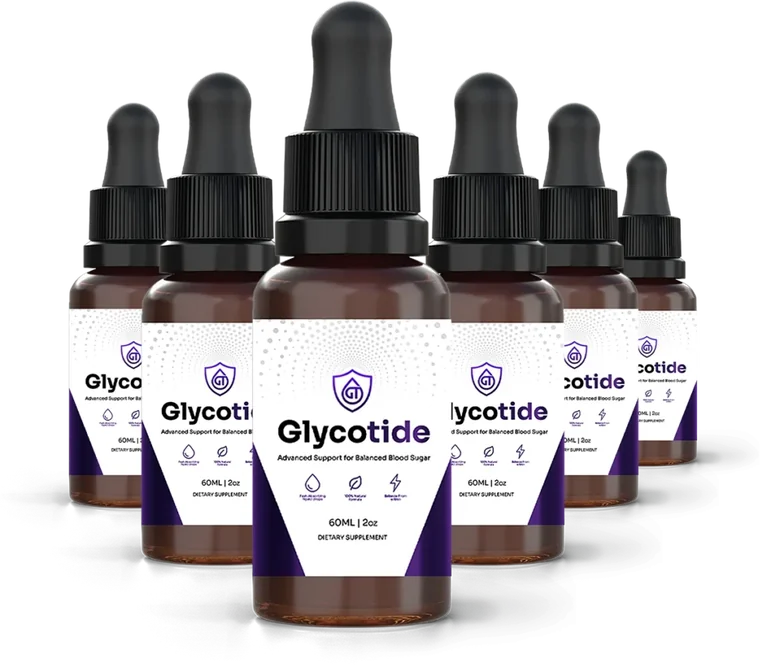
GlycoTide is a liquid formula containing the same broad category of botanicals and amino acids found in capsule-based competitors. The liquid format is a genuine and reasonable choice for anyone who prefers it, but it is unlikely to meaningfully change how the twenty-two blended ingredients are absorbed compared with an equivalent capsule — the underlying formula science is comparable either way. See our piece on proprietary blends for what that formula actually contains.