Proprietary Blends: What They Hide, In Any Format
A proprietary blend lets a manufacturer list ingredients without disclosing individual amounts — only the blend's total weight.
This applies exactly the same way whether the ingredients are pressed into a capsule or dissolved into a liquid. The format changes nothing about what you can and cannot verify.
The two ways a label declares an ingredient
Quantified: listed with its own weight, like ‘Chromium Picolinate’. You can compare it against anything.
Blended: named inside a group with a total weight but no individual amount. You know it is present; you do not know how much.
Why format is a red herring here
It is tempting to assume a liquid formula might disclose more, since liquids are sometimes associated with pharmaceutical-style precision. It does not work that way. A proprietary blend is a labelling choice, independent of whether the ingredients end up in a capsule shell or suspended in liquid. The same 200 mg-blend-of-22-ingredients pattern shows up across both formats in this product category.
The arithmetic that works regardless of format
Take the blend's total weight and divide by the number of ingredients. A 200 mg blend across 22 ingredients averages roughly 9 mg each — your ceiling for the typical ingredient, whatever form the product takes.
Then check the order: ingredients are listed by descending weight, so position tells you something even without exact numbers. And compare against published research doses for whichever ingredient matters most to you.
Applying this to GlycoTide
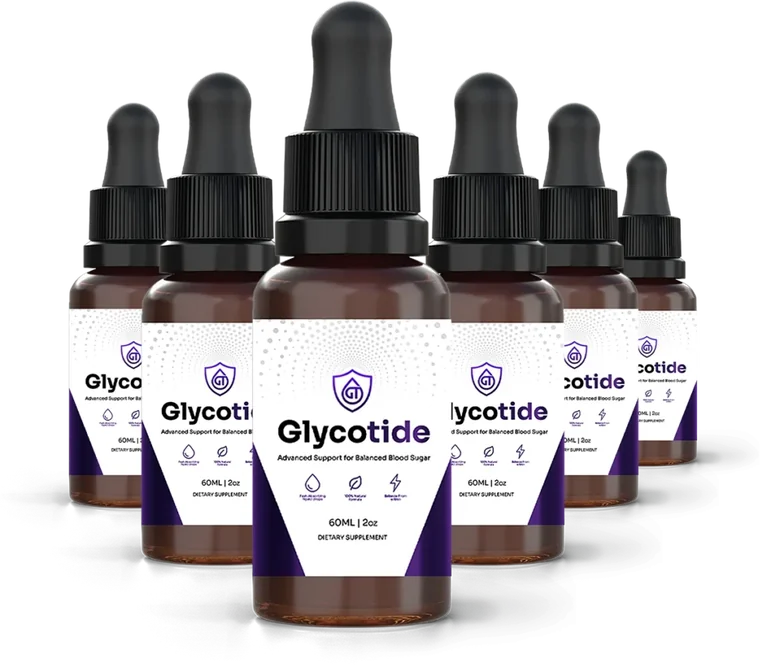
GlycoTide declares 23 ingredients: Chromium Picolinate with its own weight, and a 200 mg blend containing the other 22 — identical in structure to capsule-based competitors covered elsewhere on comparable sites. The liquid format changes how the dose is taken; it does not change what you can verify about what is in it.
See our full 90-day assessment for how this weighs against the formula's genuine strengths.